Series Storm Season / El Niño Prep (Part 6)
What should a property manager do after a storm damages the landscape? Follow this order: make the site safe, photograph everything before cleanup, report the damage to your insurer and log every call, then hire qualified crews for tree work, debris removal, and repairs. Storm damage documentation done early and carefully protects both the people on your property and any insurance claim you may file.
This is Part 6, the final part of our storm-prep series. Earlier parts covered drainage, El Niño preparation, tree risk, drainage upgrades, and slope erosion control. Even well-prepared properties can take damage, however. What you do in the first 48 hours often decides how smooth the recovery will be.
Key Takeaways
- Make the site safe first: report downed lines and gas, and keep people away from hazards.
- Photograph and video everything before cleanup.
- Notify your insurer promptly and log every call, receipt, and email.
- Match the problem to the specialist: certified arborist, civil engineer, or licensed landscape contractor.
- Check your commercial policy now, before the storm season starts.
Step 1: Safety First, Always
Before anyone starts cleanup, treat the site as a hazard until it is checked.
- Stay away from downed power lines and report them to the utility right away. Treat every wire as live.
- If you smell gas or suspect a damaged line, leave the area and call the utility or 911.
- Cone off or tape off areas under hanging limbs, leaning trees, flooded walkways, and unstable slopes.
- Do not send crews or tenants into standing water, because it can hide debris, sinkholes, and electrical hazards.
Step 2: Storm Damage Documentation Comes Before Cleanup
Insurance adjusters want to see the damage as it happened. For this reason, photograph and video first, then clean up. Most guidance for storm claims says the same thing: do not discard damaged items or complete permanent repairs before the insurer has had a chance to inspect, unless safety requires it.
What to Capture
- Wide shots of each area, followed by close-ups of each damaged tree, plant bed, wall, fence, light, or irrigation component.
- Date-stamped photos or video, with the property name and address noted in the file name.
- Standing water, washouts, slumped slopes, and debris in drains.
- Any damage to neighboring property or public areas that may be connected to your site.
- Close-ups of tags, serial numbers, or labels on damaged equipment.
Step 3: Report Damage and Keep a Log
Contact your insurance company or broker as soon as it is safe to do so, and many carriers ask for notice within a set period, often as short as 24 hours, so check your commercial policy. Write down the date, time, name, and claim number for every call or email. Similarly, keep every receipt for temporary repairs, equipment rental, and emergency labor, because these costs may be reimbursable depending on your policy.
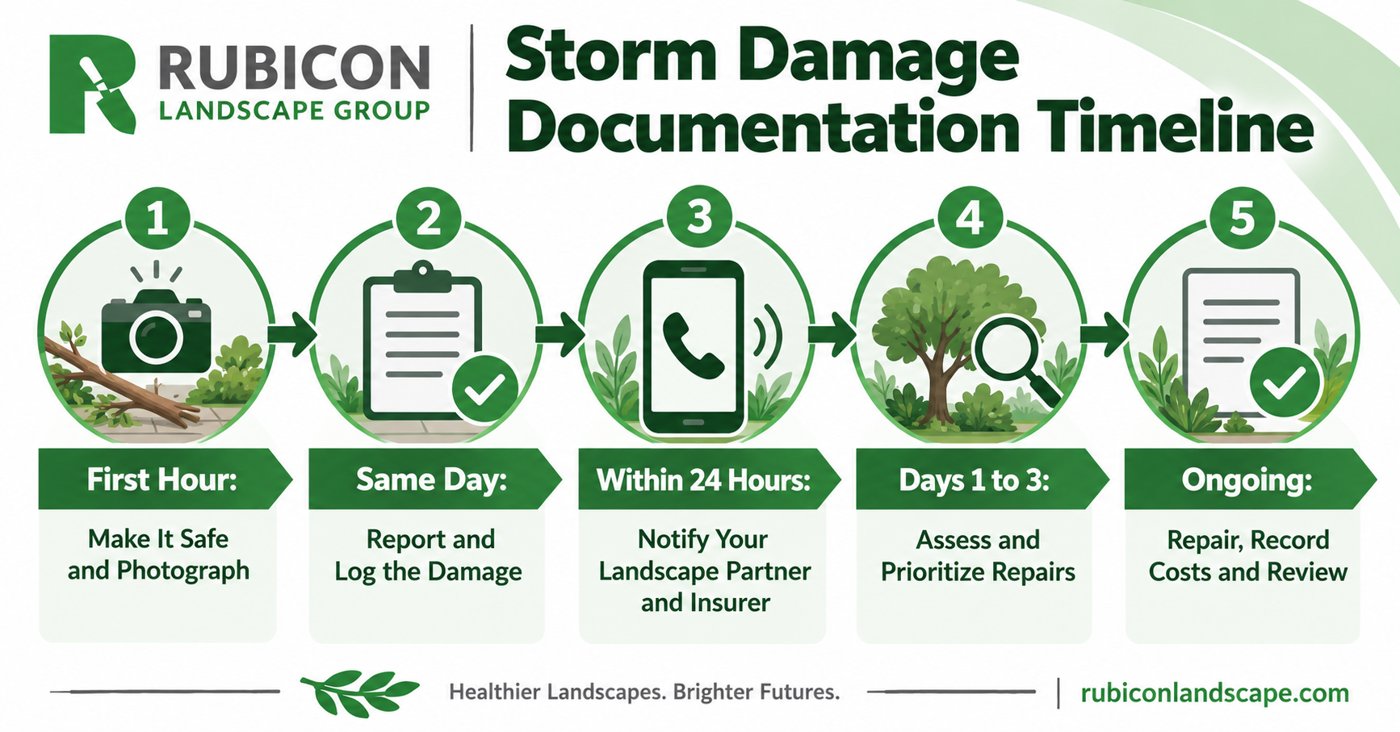
Storm Damage Documentation Checklist for Property Managers
| When | Action | Why it matters |
|---|---|---|
| First hour | Make the site safe and report hazards (power, gas, blocked access). | Protects people first |
| Same day | Photograph and video all damage before cleanup. | Creates the record adjusters expect. |
| Within 24 hours | Notify insurer or broker and start a call log. | Meets possible notice deadlines. |
| Days 1 to 3. | Arrange arborist and debris crews; make temporary repairs only as needed. | Prevents further damage without destroying evidence. |
| Ongoing | Keep receipts, a written inventory, and all correspondence. | Supports reimbursement and follow-up. |
Step 4: Call the Right Professionals
Not every storm cleanup job is a landscaping job. Therefore, match the problem to the specialist.
- Hanging or broken limbs and leaning trees: a certified arborist, not a general crew.
- Slope slumps and structural washouts: a licensed civil engineer, with landscape repair after.
- Clogged gutters, drains, catch basins, and downspouts: your landscape or facilities team, as soon as access is safe.
- Debris removal, bed repair, mulch and plant replacement, irrigation repairs: a licensed landscape contractor.
Step 5: Rebuild the Landscape Smartly
Recovery is also a chance to improve the site. If a slope washed out, add the erosion controls described in Part 5. If water ponded in the same place twice, revisit the drainage fixes from Parts 1 and 4. In addition, replace failed trees with species that suit the site, and check irrigation zones that were damaged or flooded before you turn the system back on.
Frequently Asked Questions About Storm Recovery
What should we photograph after a storm?
Everything affected, taken before cleanup: wide shots of each area, close-ups of each damaged item, and any water, soil, or debris problems. Date-stamped files with clear names make claims easier.
How soon should we contact our insurer?
As soon as it is safe. Some policies require prompt notice, often within 24 hours, so review your commercial policy now, before the storm season starts.
Can we clean up before the adjuster arrives?
Remove only what creates a safety hazard or causes further damage. Document it first and keep damaged materials until the insurer says otherwise.
Who removes storm-damaged trees?
A certified arborist. Hanging limbs and stressed trees can fail without warning, so this work is not a good fit for untrained crews.
Does landscaping storm damage get covered?
Coverage for trees, plants, and landscaping varies widely by policy. Ask your broker what is covered, and what documentation is required, before you need it.
Next Step: Have a Recovery Plan Before the First Storm
Rubicon Landscape can walk your properties before the rains, record baseline conditions, and be ready to respond afterward with debris removal, repairs, and replanting. A dated baseline record of your landscape also makes any later claim easier to support. Schedule a Landscape and Storm Readiness Assessment.
This article offers general information, not insurance or legal advice. Please review your own policy and speak with your broker or insurer about your coverage and requirements.
Resources for Going Deeper
- Save Our Water: California’s statewide water conservation program, including outdoor watering guidance.
- QWEL (Qualified Water Efficient Landscaper): EPA WaterSense-recognized certification covering irrigation auditing and system design.
- NALP (National Association of Landscape Professionals): industry certification and continuing education for landscape and irrigation professionals.
- CLCA (California Landscape Contractors Association): California-specific water management certification and continuing education.
Have a Recovery Plan Before the First Storm
We walk your properties before the rains, record baseline conditions, and respond afterward with debris removal and repairs.
Why Rubicon
For more than 30 years, Rubicon Landscape has provided dependable, professional landscape services throughout the Bay Area, helping property owners and managers maintain landscapes that are healthy, attractive, and reliably well-functioning.
Our approach is built on quality workmanship, responsive service, and proactive problem-solving, the kind of long-term partnership that protects your landscape investment and delivers consistent results, year after year.
As a division of Rubicon Programs, that work also creates real community impact. Every project supports employment opportunities and workforce development that strengthen the communities we serve.
Professional landscape services. Reliable results. Meaningful community impact.
Looking for a Landscape Partner?
From commercial properties and municipal facilities to institutional sites and multi-site portfolios, our services include:
- Commercial Landscape Maintenance & Installation.
- Landscape Construction & Renovation.
- Irrigation Installation, Repair & Management.
- Water Efficiency & Conservation Solutions.
- Regenerative Services: Horticulture, Turf Care & Weed Management.