
Series Women and Plants (Part 2)
Long before pharmacies existed, someone in almost every household knew which plant to reach for when a child had a fever or a cut would not close. In many cultures, that someone was a woman. That knowledge was not magic. It was built through patient observation, repeated across seasons, and passed from one generation to the next.
What is the history of women and plant medicine? In many communities, women were the everyday keepers of plant knowledge, gathering, growing, and preparing plants for their families. Remedies rooted in traditional plant use later helped lead to some of the most important medicines in the world, including aspirin, digoxin, artemisinin, and paclitaxel.
This is Part 2 of our series on the long relationship between women and plants. In Part 1, we looked at how women may have discovered cultivation itself. Here, we follow the same habit of close attention into medicine.
Key Takeaways
- Women were often the household keepers of plant knowledge, much of it passed along by speaking rather than writing.
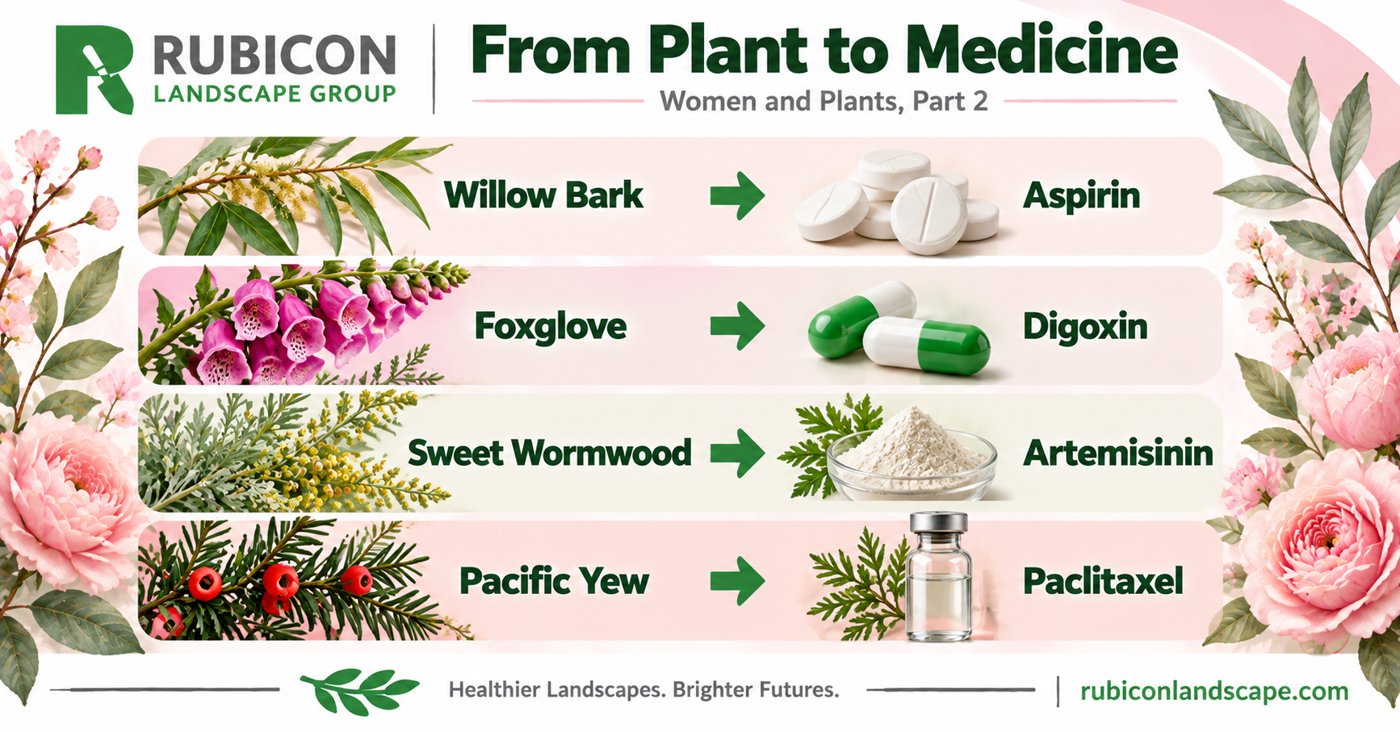
- Four plants, willow, foxglove, sweet wormwood, and the Pacific yew, each led to a major modern medicine.
- Women scientists, including Tu Youyou and Susan Band Horwitz, played key roles in modern plant-based discoveries.
- Many medicinal plants are powerful or poisonous, so they belong in the hands of trained professionals.
Why Women Often Became Keepers of Plant Knowledge
In many communities, women have carried much of the daily work of gathering plants, preparing food, and caring for the sick. Researchers who study traditional plant use, known as ethnobotanists, have documented this pattern in many regions. In medieval Europe, Hildegard of Bingen, a twelfth-century abbess, wrote about the healing properties of plants in her work Physica.
However, the record is uneven. Much of this knowledge traveled by word of mouth, so many names were never written down. As a result, we know less about these women than we would like, and the stories below should be read with that in mind.
Four Plants That Became Modern Medicines
| Plant | Traditional Use | Modern Medicine |
|---|---|---|
| Willow bark | Easing pain and fever | Aspirin, developed from salicylic acid |
| Foxglove | Treating dropsy, a swelling often linked to heart failure | Digoxin, used for heart conditions |
| Sweet wormwood | Treating intermittent fevers | Artemisinin, a malaria treatment |
| Pacific yew | Screened for anticancer activity in the 1960s. | Paclitaxel, used in breast and ovarian cancer care |
Willow Bark and Aspirin
Physicians in many ancient cultures used willow bark to ease pain and fever. Its active compound, salicin, led chemists to salicylic acid and eventually to aspirin, which Bayer began marketing in the late 1890s. A remedy that families had trusted for centuries became one of the most widely used medicines in the world.
Foxglove and the Heart
In 1785, English physician William Withering published an account of the foxglove and its medical uses, including careful notes on dosing and toxicity. A popular story says he learned of the remedy from an old woman in Shropshire who kept a family recipe for treating dropsy. Withering did write about such a recipe. However, historians question how much of the popular version is embellished, and the woman’s identity is uncertain. What is well documented is his systematic clinical work. Because foxglove is poisonous, his focus on careful dosing mattered a great deal.
Sweet Wormwood and Malaria
In 1969, Chinese pharmacologist Tu Youyou joined a government project to find new malaria treatments. Her team reviewed hundreds of traditional remedies, and an ancient handbook by Ge Hong pointed to sweet wormwood (Artemisia annua). Tu adjusted the extraction method to avoid high heat, and the result was artemisinin. In 2015, she received half of the Nobel Prize in Physiology or Medicine for her discoveries concerning a novel therapy against malaria.
The Pacific Yew and Cancer Care
In 1962, a U.S. Department of Agriculture botanist collected bark from a Pacific yew in Washington State as part of a plant-screening program run with the National Cancer Institute. Researchers later isolated the active compound, paclitaxel. In 1979, Dr. Susan Band Horwitz discovered how it works, by stopping cancer cells from dividing. The FDA approved paclitaxel for ovarian cancer in 1992 and for breast cancer in 1994. Early supply was a serious challenge, because harvesting the bark kills the tree, so researchers developed a semisynthetic version instead.
What These Stories Have in Common
The history of women and plant medicine is full of careful observers.
Each story starts with someone paying close attention to a plant over time. In addition, each one shows that traditional knowledge is a starting point, not a finish line. Careful testing, safe dosing, and modern chemistry turned folk remedies into reliable medicines. Finally, credit has often been uneven, which is one more reason to name the women whose work we do know.
A Quick Safety Note
Many medicinal plants are powerful, and some are poisonous. Foxglove is a clear example. Please do not treat these stories as a how-to guide. If you are interested in plant-based remedies, talk with a doctor or pharmacist first.
Why This History Still Matters on the Job
Plants are our daily work at Rubicon Landscape. Understanding what a plant can do for people, and what it can do to them, is part of caring for a property well. As a result, thoughtful plant selection, clear knowledge of which species are toxic, and good communication with property teams all belong in professional landscape care.
Next in the series, in Part 3, we move from the medicine cabinet to the garden bench and ask why gardens have always soothed the soul.
Frequently Asked Questions About Women and Plant Medicine
Did women discover these medicines?
Not alone, and not always. Women were often the household keepers of plant knowledge, and some, such as Tu Youyou and Susan Band Horwitz, made key modern discoveries. However, many contributors across history were never recorded.
What is an ethnobotanist?
An ethnobotanist studies how people in different cultures use plants for food, medicine, building, and ceremony.
Is it safe to use medicinal plants at home?
Not without guidance. Many medicinal plants are powerful, and some are poisonous. Please talk with a doctor or pharmacist before using any plant remedy.
Why is foxglove dangerous?
Foxglove contains compounds that act on the heart and are toxic in the wrong dose. That is why Withering focused so heavily on careful dosing.
Are plant-based medicines still important today?
Yes. Aspirin, digoxin, artemisinin, and paclitaxel all trace back to plants, and researchers continue to study plants for new treatments.
Want a Landscape That Works for People?
Rubicon Landscape designs and maintains commercial landscapes across the Bay Area, with careful plant selection and a mission to create jobs and opportunity. Tell us about your property, and we will help you plan next steps.
Sources and Further Reading
- National Cancer Institute: Natural Compound Helps Treat Breast and Ovarian Cancers.
- NobelPrize.org: The Nobel Prize in Physiology or Medicine 2015.
- King’s College London: Withering and Digitalis.
This article is for general information and is not medical advice.
Talk to Rubicon About Your Landscape
Plants are our daily work. Let us help you plan a landscape that serves the people who use it.
Resources for Going Deeper
- Save Our Water: California’s statewide water conservation program, including outdoor watering guidance.
- QWEL (Qualified Water Efficient Landscaper): EPA WaterSense-recognized certification covering irrigation auditing and system design.
- NALP (National Association of Landscape Professionals): industry certification and continuing education for landscape and irrigation professionals.
- CLCA (California Landscape Contractors Association): California-specific water management certification and continuing education.
Why Rubicon
For more than 30 years, Rubicon Landscape has provided dependable, professional landscape services throughout the Bay Area, helping property owners and managers maintain landscapes that are healthy, attractive, and reliably well-functioning.
Our approach is built on quality workmanship, responsive service, and proactive problem-solving, the kind of long-term partnership that protects your landscape investment and delivers consistent results, year after year.
As a division of Rubicon Programs, that work also creates real community impact. Every project supports employment opportunities and workforce development that strengthen the communities we serve.
Professional landscape services. Reliable results. Meaningful community impact.
Looking for a Landscape Partner?
From commercial properties and municipal facilities to institutional sites and multi-site portfolios, our services include:
- Commercial Landscape Maintenance & Installation.
- Landscape Construction & Renovation.
- Irrigation Installation, Repair & Management.
- Water Efficiency & Conservation Solutions.
- Regenerative Services: Horticulture, Turf Care & Weed Management.