

Series: Women and Plants / The Beginning (Part 1)
How Women and Plants Have Been Helping Each Other Since the Beginning
Somewhere, thousands of years before the word “agriculture” existed, a woman knelt beside a pile of discarded plant trimmings near her camp and noticed something. Where she’d tossed the cuttings weeks before, new shoots were pushing up through the soil.
She hadn’t planted anything. The plant had done that on its own. But she was the one who noticed, who remembered, and who, the next time, may have placed the trimmings there on purpose instead of by accident.
That small, repeatable act, noticing, remembering, repeating, may be the actual origin of cultivation itself.
A Theory, Not a Legend
This isn’t folklore. It’s a real, seriously considered idea in anthropology, sometimes called the gathering hypothesis or the refuse heap theory of early cultivation. The reasoning is straightforward: in most hunter-gatherer societies studied by anthropologists, plant gathering, processing, and preparation were primarily women’s work. That meant women spent far more cumulative time with plants than anyone else in the group, watching them up close, season after season, generation after generation.
That kind of sustained, repeated observation is exactly what it takes to notice something as subtle as regrowth from a discarded root or a dropped seed head near a living space. Not a single flash of insight, but thousands of small, patient observations, compounding.
It’s worth saying plainly: this is a theory, one among several explanations for how cultivation began, not a settled fact carved into stone. Archaeologists and anthropologists still debate the exact path from gathering to farming, and it likely didn’t happen the same way in every region at once. But the gathering hypothesis has real evidentiary support, and it points to something worth sitting with: the relationship between women and plants may not just be old. It may be foundational to how humans learned to grow food at all.
What That First Noticing Actually Required
Think about what it actually takes to go from “huh, that’s growing back” to intentional cultivation. It’s not one moment of genius. It’s a chain of small, deliberate acts:
- Noticing that regrowth happened at all, rather than walking past it
- Remembering where and when it happened
- Connecting the regrowth to the discarded trimmings, rather than assuming it was random
- Testing that connection on purpose, placing trimmings somewhere intentionally to see if it happened again
- Repeating what worked, and passing that knowledge to someone else
That’s not luck. That’s the scientific method, practiced long before anyone had a name for it, likely by women whose daily, hands-in-the-soil relationship with plants gave them the observational depth to see a pattern that a more occasional visitor to the same ground would have missed entirely.
A Relationship That Runs Both Directions
What’s easy to miss in the “who discovered farming” framing is that this was never a one-way relationship. The plants needed something too. Disturbed soil. Cleared competition. A gatherer willing to leave a root system intact instead of destroying it. Cultivation, in this telling, isn’t a story of humans conquering plants. It’s a story of two things learning to help each other, the plant offering food and medicine, the woman offering the conditions the plant needed to keep growing.
That reciprocity is still the actual job today. A horticulturist, whether tending a single garden bed or a multi-acre commercial property, is still doing a version of the same thing: watching closely enough to notice what a plant needs, and giving it that, in exchange for what it gives back.
Where This Series Goes From Here
This is Part 1 of a short series on the long relationship between women and plants. From here, we’ll look at how that early observational knowledge became something else entirely: medicine. Long before pharmacies, women were often the ones who knew which plant eased a fever, which one calmed a stomach, which one helped a wound close. That knowledge didn’t come from nowhere. It came from the same patient, generational noticing that may have started cultivation in the first place.
Part 3 will follow that thread even further, into something harder to measure but just as real: the way plants have always been used not just to heal the body, but to soothe something quieter, the mind, the nervous system, the parts of us that a garden seems to reach in ways little else does.
Why We’re Telling This Story
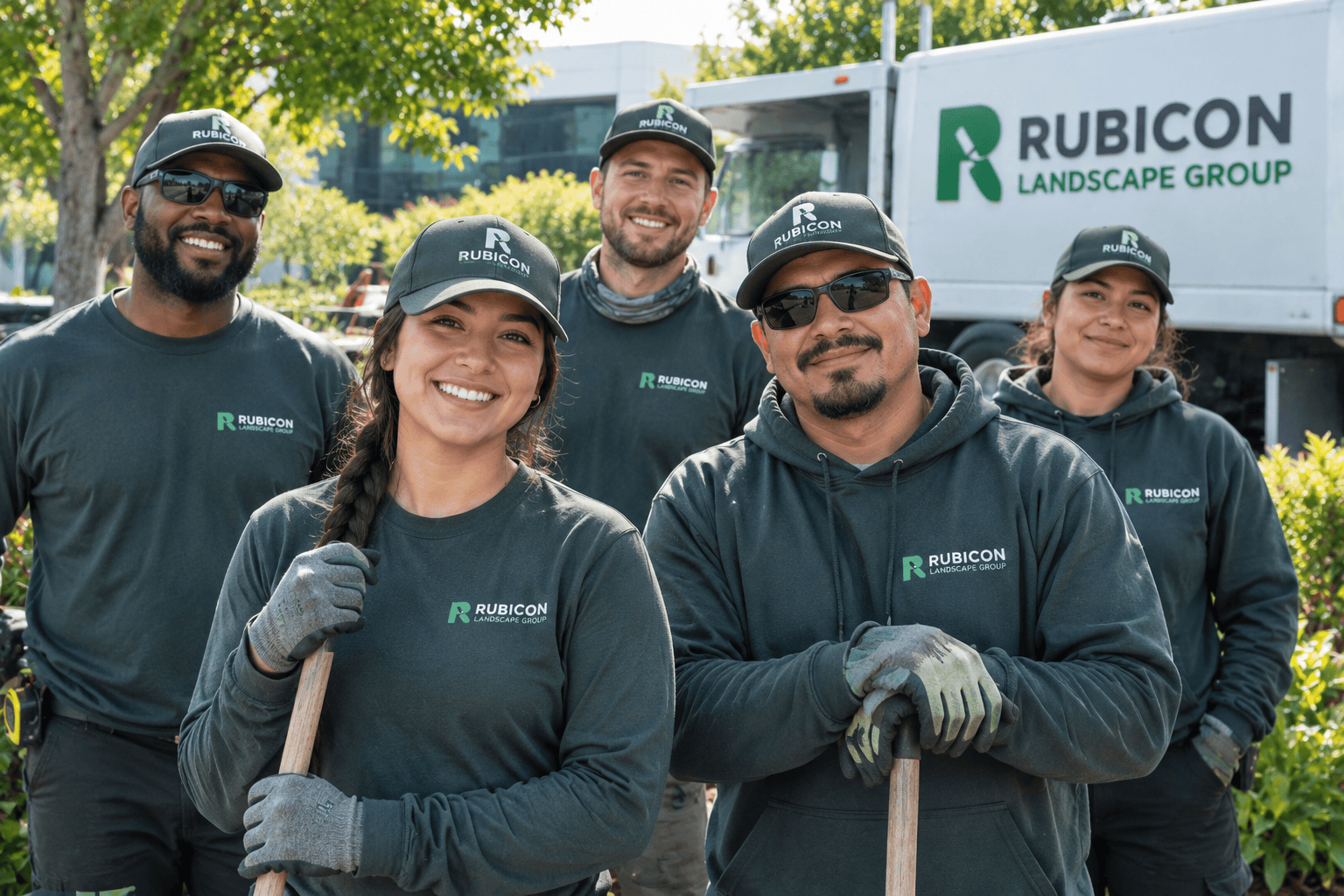
At Rubicon, plenty of the hands doing this work today, our horticulturists, our plant health specialists, are continuing something genuinely old. Not a metaphor. An actual, traceable line of patient, close attention to what a living thing needs, stretching back further than written history goes.
It felt worth telling that story, not because it sells a service, but because it’s true, and because understanding where this relationship started makes it a little easier to see why it still matters.
Resources for Going Deeper
- Save Our Water: California’s statewide water conservation program, including outdoor watering guidance
- QWEL (Qualified Water Efficient Landscaper): EPA WaterSense-recognized certification covering irrigation auditing and system design
- NALP (National Association of Landscape Professionals): industry certification and continuing education for landscape and irrigation professionals
- CLCA (California Landscape Contractors Association): California-specific water management certification and continuing education
Why Rubicon
For more than 30 years, Rubicon Landscape has provided dependable, professional landscape services throughout the Bay Area, helping property owners and managers maintain landscapes that are healthy, attractive, and reliably well-functioning.
Our approach is built on quality workmanship, responsive service, and proactive problem-solving, the kind of long-term partnership that protects your landscape investment and delivers consistent results, year after year.
As a division of Rubicon Programs, that work also creates real community impact. Every project supports employment opportunities and workforce development that strengthen the communities we serve.
Professional landscape services. Reliable results. Meaningful community impact.
Looking for a Landscape Partner?
From commercial properties and municipal facilities to institutional sites and multi-site portfolios, our services include:
- Commercial Landscape Maintenance & Installation
- Landscape Construction & Renovation
- Irrigation Installation, Repair & Management
- Water Efficiency & Conservation Solutions
- Regenerative Services: Horticulture, Turf Care & Weed Management